


Fair Play
Booth upon booth of meticulously fabricated objects parade themselves at the fair. Some shiny, some massive, and others seemingly impossible. Their awesomeness solidified in cultural factories that spit out balloon dogs, worlds inside vitrines, and giant mirrored chrome beans.
The well-heeled, the VIP’d, and the art school blaggers feel equal in the selfies they take with them. In this one, a bit like a fun-house mirror, a purple-haired, Nirvana-tee-wearing second year takes a snap of her distorted white Nikes. Her right hand, in her back stonewashed pocket, nervously strokes the edges of the ticket her friend’s friend, who works in a gallery, gave her.
The Koons-ification of the art object isn’t new. After all, any artist worth their salt will do anything to get the idea out. They’ll use anything they can get their hands on, and industrial processes are certainly not off the cards. And too right. Whatever it takes. Whatever means necessary.
Credit where it’s due.
Unlike music or movies, this hidden silent economy flows behind the scenes with no credit given. You can’t just tap “more” on the song and see who composed it, programmed it, recorded it, wrote it, or engineered it. You can’t wait until the end credits roll and see the art directors, the assistant’s assistant, or whose genius lit the scene. No. It’s simply Murakami, Hirst, Koons, Kapoor, or Arsham. Like David Blaine, how the magic trick is done is never revealed.
Meanwhile, our second-year art world hopeful wrestles a bag of found cardboard, a backpack of National Geographics for collaging, and a portfolio that acts more like a kite in London’s wind - into an art shop. She eyes up some gesso to prime the cardboard, or her charcoal won’t show up.
The money from the bar she gets abused in reveals itself on her phone, and, as always, it’s not enough. Her friends could call their dad, and he’d stop it all, but this kid has no safety net because she’s one of the few pity cases the college lets in for free. It was her talent that unlocked the golden ticket, but right now, talent doesn’t pay the bills.
Pooring
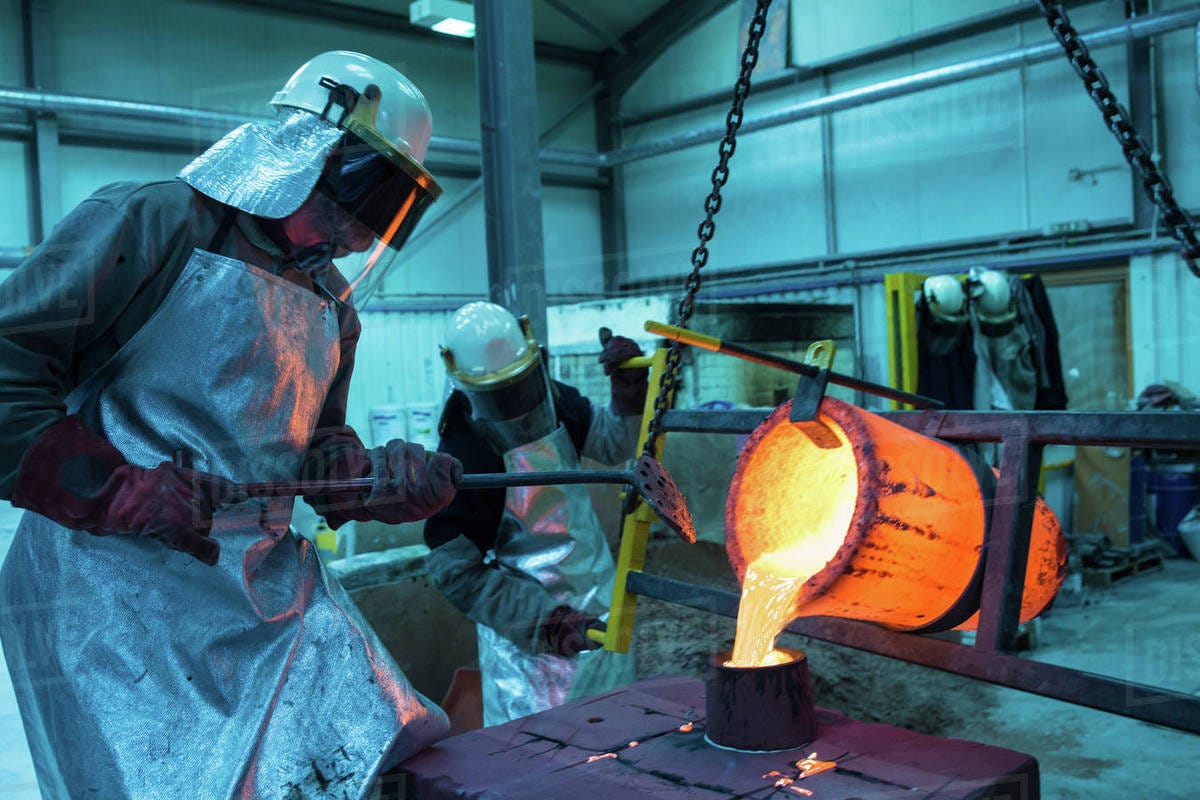
On the outskirts of town, in an old factory building whose shell feels like it survived the Great Fire, another kind of fire is raging. A stormtroopered-up technician is pouring molten bronze at 2000 degrees Fahrenheit into a mould that ironically merges Mickey Mouse with Daffy Duck. It’s dangerous to make them. It takes training, skill, and money. Lots of money. But the artist knows if they unlock the power of bronze, these will fly out of the Miami gallery waiting patiently to sell more red-chip trinkets to the boat-party brigade that will descend in December. Some of them have houses there, others have boats, and some will stay on their friends’ boats, but they all need something to flex. A Mickey-cum-Daffy is perfect, just the right level of cheek and subversive meaning without actually meaning anything.
If you can afford to make one, someone will buy it. That doesn’t make it good. Luckily for us, there are plenty of wealthy people with taste, building real collections that will save the best stuff for kids who haven’t been born yet. The Mickey-Duck, that’s not for them.
The foundry will work with any artist who’s got the cash. And if they are too busy and don’t have the capacity, there are plenty more you could try.
Damien Hirst used to make money so he could make art, and the art was good. What he does now is his business, literally. Hockney ripped a hole in him for not making his work himself and for using fabricators. That’s not a debate I’m interested in here. I don’t expect an architect to lay every brick in their own buildings, and I’d be a total hypocrite if I started denouncing help with my own work. I don’t have the skills to make a lot of the stuff I imagine. I’m not a structural engineer, and I don’t have the equipment to bring a lot of concepts to life. In fact, nobody wants to see me try to make something out of a drill and wood. That’s a recipe for disaster. Let’s leave it at the fact that it’s probably fine for the person who designs the car not to have made the car with their own hands, because we all want the car to actually work.
Living in a box.
Now, back to our art student. Her ideas are way stronger than a hybrid Disney mash-up. She’s interested in negative space. The removal of the art object altogether. She’s living in a box, student housing, eighth floor, property-developer pump-and-dump shell. Her bed touches her desk, and her head can be on her pillow whilst she screws up drawings she doesn’t like, and one-handed three-pointers them, LaMelo-style, into the toilet bowl in the bathroom.
“That’s ice cold from beyond the arc!”
She’s only there during term time, so that falls under the legal threshold for adequate housing. Nice loophole for the property company. And the price? Partly the reason why she can’t afford to make most of her ideas. Totally disproportionate. And the college gets a back-hander for forcing her to live there in exchange for the four hours a term she might get with a real human tutor. The student debt, a compounding albatross that will be around her neck for decades, but she’ll worry about that when she’s earning.
I’m going off on one. Let’s park the property problem and get back to the issue at hand. She wants to make a giant cardboard version of Anish Kapoor’s bean. That’s the giant shiny chrome thing that lives in Chicago. It cost tens of millions. It’s either an architectural marvel or an overpriced selfie spectacle, depending on how you look at it. It almost avoided the latter when the artist tried to impose a no-photography-in-the-park rule to stop people accidentally infringing on the copyright of his work.
Anyway, she grabs her phone and taps a message to the fabricators who coat stuff in Vantablack. A very complex material that uses nano-sized rods of carbon to trap light. Basically, you coat something with the stuff, and when light hits it, it goes inside the forest of carbon, bounces around forever, and gets trapped. So 3D things look flat, like they’ve been photoshopped out.
She’s seen the stuff sprayed on a gigantic building during the Olympics. She’s seen cars coated in it, watches, deodorant cans, and record sleeves. Nobody’s used it for art yet.
She taps her request to the company.
‘Hi there, I’m a second-year art student, and I have an idea for a sculpture. I’d love to explore the idea of having you coat it in Vantablack. Can you please give me a rough idea of costs and timeline if you’re not too busy?
Thanks’
She presses send and nods off, watching the final season of Stranger Things.
Painting is a verb.
Let’s zoom out and ask a question.
What is painting? Keep it in mind as I take you through a few scenarios.
First up, Andy Warhol has coated some canvases in copper. The canvases sit flat on the floor in his vast and freezing cold NYC factory. His assistant has been drinking Mexican beer, Andy says it works best. Now Andy is directing him to urinate on the surface. Over time the copper oxidises, rusts, and starts to form subtle Rorschach test-style nebulous shapes. An organic abstraction that becomes the iconic “piss paintings”.
Pete Doherty is using a syringe to draw a woman, a school bus, and some poetry on paper with blood.
And me? I’ve got my hands absolutely sticky with strawberry jam, that’s jelly if you’re the other side of the pond. And I’m smearing it all over a white plaster statue.
We are all painting something with something.
To us, painting is an act. The thing we’ve made has been painted. And in the case of Pete and Andy, the thing itself is a painting.
Big coating.
In a multi-billion-dollar facility on the outskirts of Berkshire, AkzoNobel are pumping out g-zillions of tonnes of white household paint. Their market capitalisation is 10.3 billion, and the white paint they pump contains no less than 30 different ingredients across state-of-the-art polymers, pigments, dispersant packages, defoamers, coalescents, and preservation blends. And the process to make it? Forget about it. The equipment is space-age.
Yeah, we call it paint, and your auntie can dip their brush in it and paint the wall, but it’s a crazy complex chemical coating.
Our art student wakes up to a ping from her phone. Wow. They’ve written back.
I’m sorry we can’t help you.
We’ve agreed only to work with Anish Kapoor for art.
So we can’t coat things for any other artists.
Besides, it’s not a paint. You can’t just dip your brush in it.
Good luck with your project.
But wait. “Is it because I’m an artist? Is it because they think I’m poor? Is it because they are too busy? I don’t care if it’s paint?”
She balances a huge sheet of cardboard on her sink. It hosted a 50-inch TV once. She grabs her red, white, and blue striped toothpaste and writes the words
IT’S JUST NOT FAIR
in the middle.
Snaps it on her phone.
Posts it.
Three likes later, she puts on her disintegrating white Nikes, grabs the fair ticket with someone else’s name on it, and heads out.